







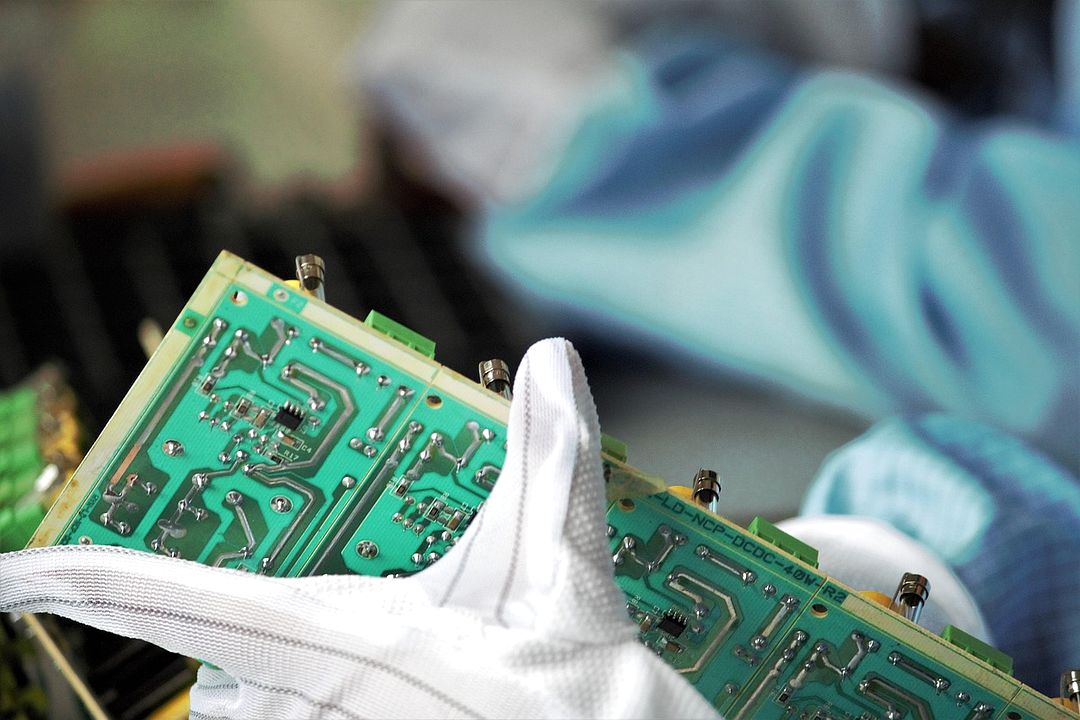
The semiconductor investment landscape has fundamentally shifted since the CHIPS Act became law, and 2025 is shaping up to be the year where we’ll actually see who’s swimming naked when the tide goes out. After decades of offshoring chip production to Asia, the United States is finally—well, sort of—getting serious about domestic manufacturing.
The CHIPS Act Reality Check: Beyond the Headlines
When President Biden signed the CHIPS and Science Act into law in August 2022, allocating $52 billion for domestic semiconductor manufacturing, the market went wild. But here’s the thing—throwing money at a problem doesn’t automatically solve it, especially in an industry where fab construction timelines stretch longer than most Hollywood marriages.
The reality is messier than the press releases suggest. Building a modern semiconductor fabrication facility isn’t like constructing a strip mall. We’re talking about facilities that require the cleanliness of a space station, the precision of a Swiss watch, and the complexity of a small city’s infrastructure.
“The semiconductor industry operates on cycles that most investors simply don’t understand. What looks like a winner today might be tomorrow’s cautionary tale.” — Industry Manufacturing Report
Timeline Disconnect: When Reality Meets Expectations
Most CHIPS Act funding recipients are discovering what industry veterans already knew—lead times for critical equipment stretch 12-18 months, and that’s assuming everything goes perfectly. ASML’s extreme ultraviolet (EUV) lithography machines, essential for cutting-edge chip production, have waiting lists that make getting a table at a trendy restaurant look easy.
The companies that started planning their domestic expansion before the CHIPS Act even passed are the ones positioned to capitalize first. Those jumping on the bandwagon after the funding announcements? They’re looking at 2027 or 2028 for meaningful production.
Clear Winners: The Early Movers
Taiwan Semiconductor Manufacturing Company (TSMC)
TSMC’s Arizona fabs represent the gold standard of semiconductor investment strategy. The company didn’t wait for subsidies—it committed to the project in 2020 and simply accelerated plans when CHIPS Act funding materialized. Their first Arizona fab is targeting production by late 2025, with a second facility following by 2028.
What sets TSMC apart isn’t just their technical expertise—it’s their understanding of the political game. By bringing their most advanced 4-nanometer and 3-nanometer processes to Arizona, they’re essentially making themselves indispensable to U.S. national security interests.
Intel: The Comeback Kid
Intel’s foundry services ambitions looked like a long shot just three years ago. Pat Gelsinger’s return as CEO coincided perfectly with the shifting geopolitical landscape, and the company has leveraged CHIPS Act funding more effectively than any domestic player.
Their Ohio megafab project, supported by $8.5 billion in federal funding, represents the largest semiconductor investment in U.S. history. But here’s what makes it interesting—Intel isn’t just building capacity, they’re building an ecosystem. The company is coordinating with suppliers, universities, and state governments to create a genuine semiconductor hub.
| Company | CHIPS Act Funding | Project Timeline | Production Start |
|---|---|---|---|
| TSMC | $6.6 billion | 2022-2028 | Late 2025 |
| Intel | $8.5 billion | 2023-2030 | 2027 |
| Samsung | $6.4 billion | 2022-2030 | 2026 |
| Micron | $6.1 billion | 2023-2032 | 2028 |
Samsung: The Dark Horse
Samsung’s Texas expansion often gets overlooked in favor of flashier announcements, but their $17 billion investment (partially supported by CHIPS Act funding) might be the smartest play of all. The company is focusing on advanced logic chips and has already secured major customers for their future production.
The Struggling Contenders
GlobalFoundries: Scale Problems
GlobalFoundries received significant attention early in the CHIPS Act discussion, but their limitations are becoming apparent. The company abandoned cutting-edge node development years ago, focusing instead on mature processes. While there’s definitely demand for older chip technologies, the geopolitical risk mitigation argument weakens when you’re not producing the most strategically important semiconductors.
Their New York expansion, while beneficial for regional employment, doesn’t move the needle on true technological independence.
Smaller Players: Reality Bites
Several smaller semiconductor companies announced ambitious domestic expansion plans in the wake of CHIPS Act passage. Many are discovering that good intentions don’t substitute for deep pockets and technical expertise.
The equipment costs alone are staggering—a single EUV machine costs over $200 million, and modern fabs require dozens of them. Add in the specialized infrastructure, clean room construction, and skilled workforce requirements, and suddenly those government subsidies look less generous.
Geopolitical Risk: The X-Factor
Geopolitical risk has become the defining factor in semiconductor investment decisions, but investors often misunderstand its implications. The risk isn’t just about potential conflict—it’s about the gradual decoupling of supply chains that took decades to optimize.
China’s semiconductor ambitions create a fascinating paradox. As Beijing pushes for domestic chip capabilities, they’re simultaneously driving Western companies to diversify away from Chinese supply chains. This creates short-term disruption but potentially massive long-term opportunities for companies positioned in “friendly” territories.
The Taiwan Question
Taiwan produces roughly 60% of the world’s semiconductors and over 90% of the most advanced chips. Any serious disruption to Taiwanese production would create immediate shortages and massive price spikes. This reality is driving the urgency behind domestic manufacturing initiatives, but it’s also creating unrealistic expectations about timeline and scale.
The uncomfortable truth? Even with aggressive domestic expansion, the United States won’t achieve meaningful semiconductor independence for at least a decade. The industry is simply too complex and capital-intensive for rapid transformation.
Investment Strategy: Separating Signal from Noise
Focus on Ecosystem Players
The biggest semiconductor investment opportunities might not be in the chip companies themselves. Equipment manufacturers, specialty chemical suppliers, and infrastructure providers are seeing sustained demand as multiple regions simultaneously build domestic capabilities.
Companies like Applied Materials, Lam Research, and KLA Corporation are essentially selling picks and shovels during a gold rush. Their order backlogs stretch well into 2026, and pricing power remains strong.
Avoid the Hype Stocks
Several smaller semiconductor companies have seen their valuations inflated by CHIPS Act optimism despite limited actual benefits from the legislation. The market has been surprisingly inefficient at distinguishing between companies with real government contracts and those simply positioned in adjacent markets.
Geographic Diversification Matters
Smart semiconductor investment strategies should consider the global nature of supply chain diversification. While U.S. domestic production gets the headlines, companies building capacity in Japan, Europe, and India are also benefiting from the same geopolitical trends driving American policy.
Looking Ahead: 2025 Catalysts
Several key developments will shape semiconductor investment returns in 2025:
Production Milestones: TSMC’s Arizona fab coming online represents a major proof-of-concept for advanced chip production outside Taiwan. Success here validates the entire domestic manufacturing thesis.
Election Implications: The 2024 election results will influence CHIPS Act implementation and funding disbursement. While the legislation enjoys bipartisan support, execution details matter enormously.
China Response: Beijing’s reaction to successful Western supply chain diversification could range from aggressive competition to trade restrictions. Either scenario creates both risks and opportunities.
Technology Evolution: The industry’s transition to 3-nanometer and eventually 2-nanometer processes will determine which companies maintain technological leadership. CHIPS Act funding only matters if recipients can stay at the cutting edge.
The semiconductor investment thesis for 2025 comes down to this: the industry is undergoing its most significant geographic and strategic realignment in decades. The companies that understand this shift isn’t just about moving production—it’s about rebuilding entire ecosystems—will emerge as the long-term winners.
But patience will be required. The most transformative changes from the CHIPS Act won’t be visible until 2027 or 2028. Until then, investors need to separate genuine progress from political theater and focus on companies with the technical capabilities and financial resources to execute on their ambitious promises.